When English Isn't the First Language - Ebook
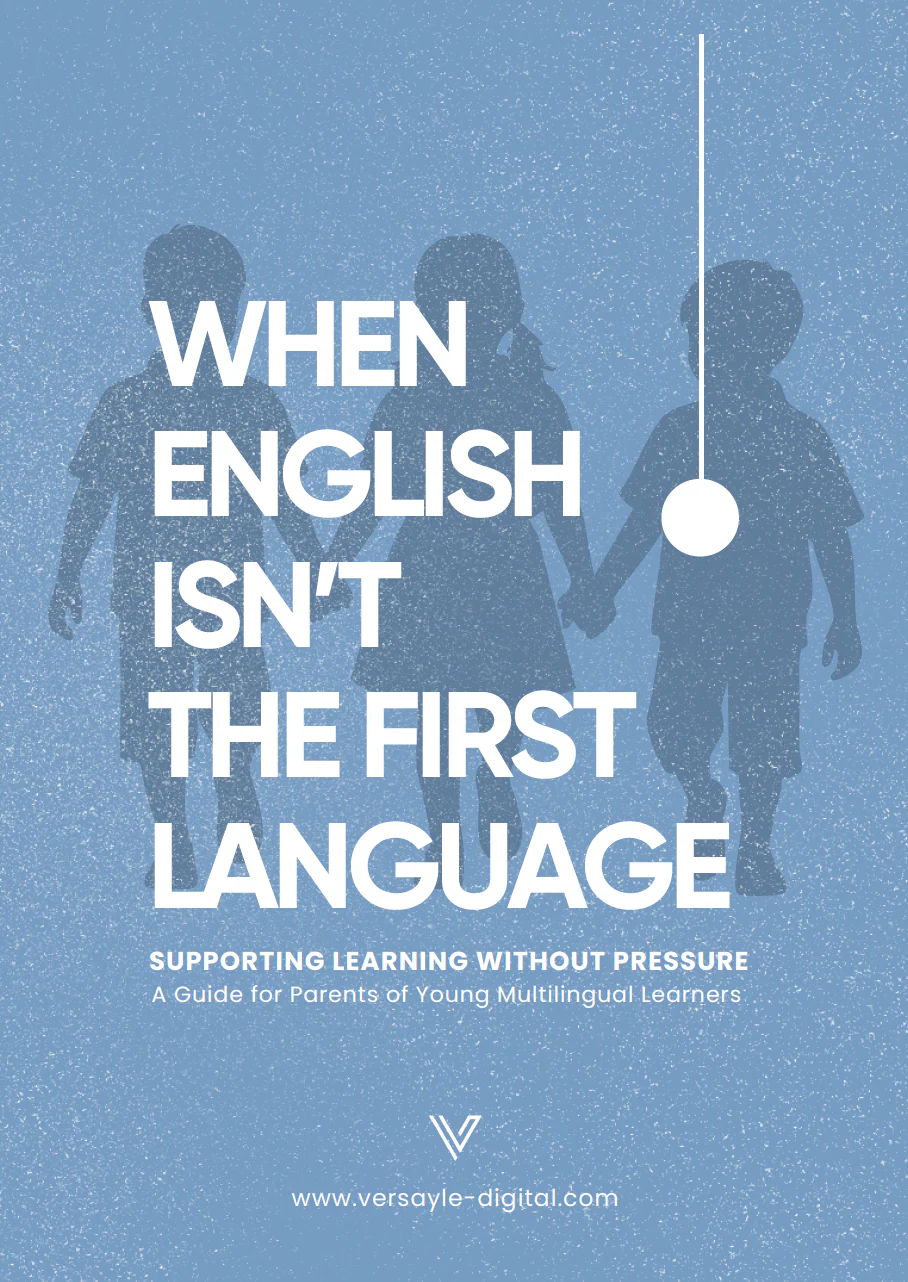
When English Isn’t the First Language
Supporting Young Children Learning English (Ages 3–8)
A Practical Parenting Guide for Bilingual & Multilingual Families
Raising or educating a child in English when it isn’t their first language can feel overwhelming — for parents and children alike. When English Isn’t the First Language is a calm, practical parenting guide designed to help families support English language development without pressure, stress, or unrealistic expectations.
Written for parents of young children learning English alongside another language, this guide provides reassurance, clarity, and evidence-informed strategies that respect both a child’s emotional well-being and their natural language development.
Rather than focusing on drills or correction, this resource emphasizes connection, confidence, and steady progress — helping children feel safe, supported, and capable as they learn.
In this guide, parents will learn:
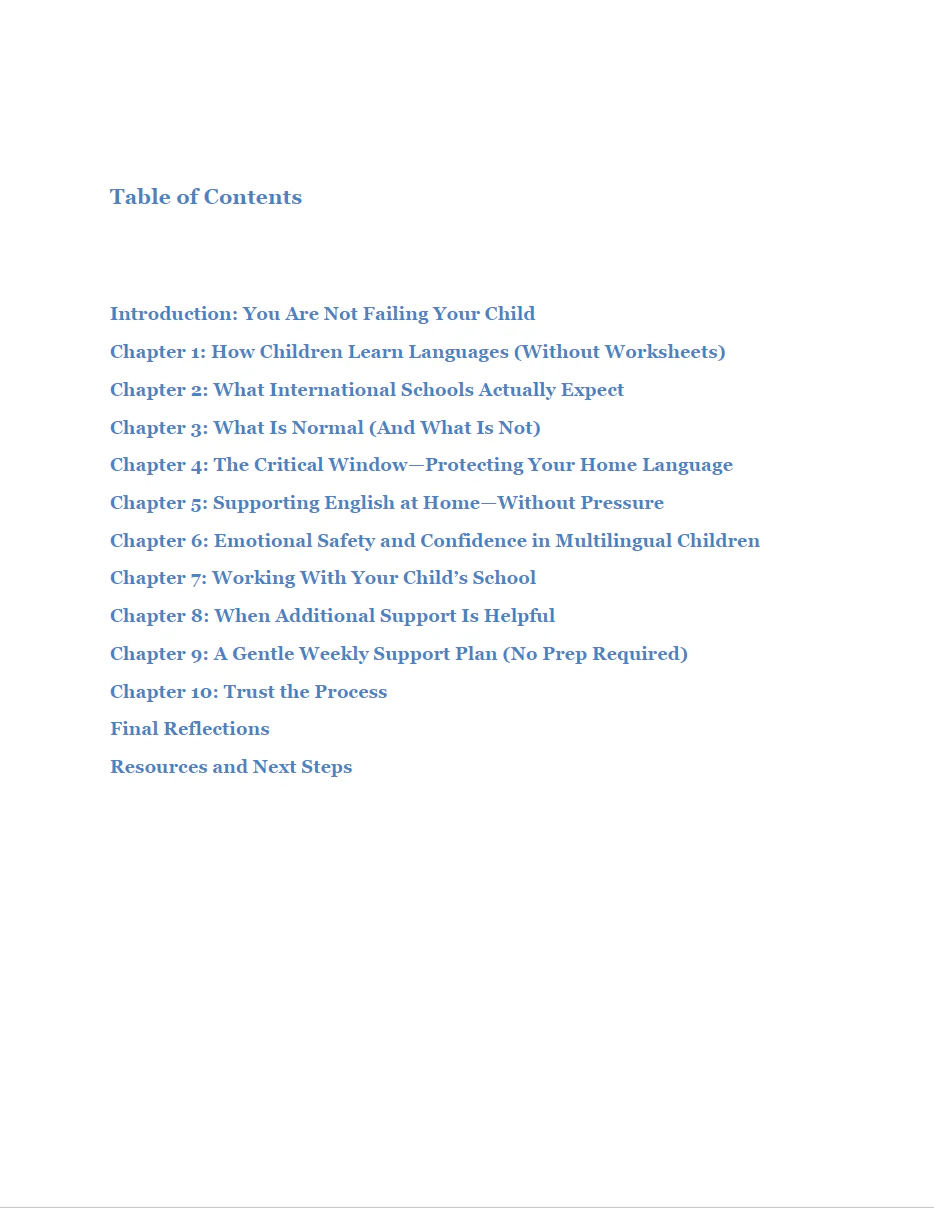
- How young children naturally acquire English alongside another language
- What is typical (and what isn’t) in bilingual and multilingual development
- How to support English learning at home without forcing or drilling
- Simple routines and language-rich activities that fit into everyday life
- How to reduce anxiety, build confidence, and protect a child’s self-esteem
- Common myths about bilingual children — clearly explained and gently challenged
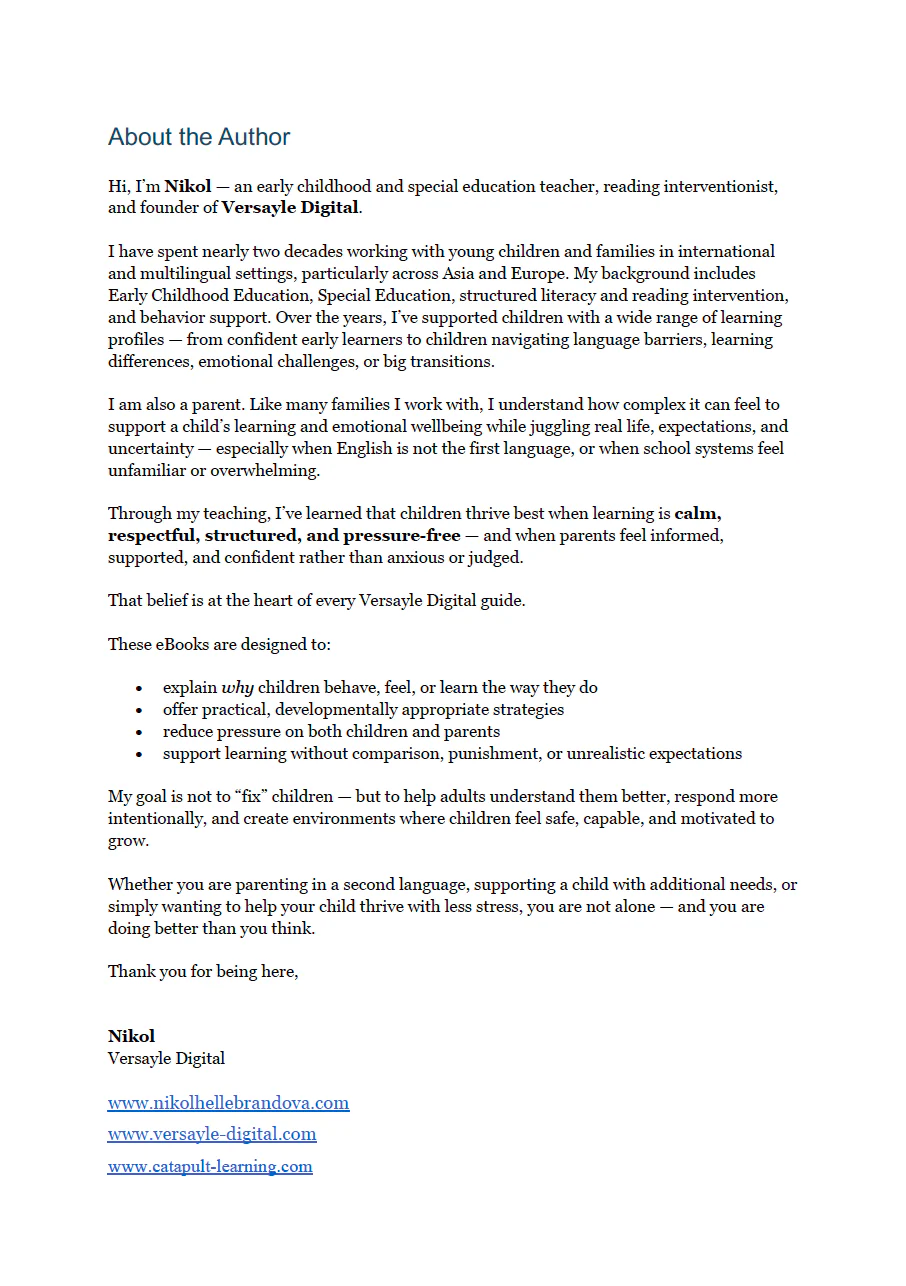
Created by an experienced early-years educator working with multilingual children and families, When English Isn’t the First Language blends child development knowledge with realistic, family-friendly strategies that can be applied immediately.
The tone is reassuring, respectful, and practical — ideal for parents who want to support English learning while honoring their child’s home language and identity.
Who this guide is for:
- Parents of children ages 3–8
- Families raising bilingual or multilingual children
- Parents supporting English as an additional language at home
- Caregivers and educators working with young multilingual learners
This is a digital download (PDF, 78 pages). No physical product will be shipped.
Original: $27.00
-70%$27.00
$8.10Product Information
Product Information
Shipping & Returns
Shipping & Returns
Description
When English Isn’t the First Language
Supporting Young Children Learning English (Ages 3–8)
A Practical Parenting Guide for Bilingual & Multilingual Families
Raising or educating a child in English when it isn’t their first language can feel overwhelming — for parents and children alike. When English Isn’t the First Language is a calm, practical parenting guide designed to help families support English language development without pressure, stress, or unrealistic expectations.
Written for parents of young children learning English alongside another language, this guide provides reassurance, clarity, and evidence-informed strategies that respect both a child’s emotional well-being and their natural language development.
Rather than focusing on drills or correction, this resource emphasizes connection, confidence, and steady progress — helping children feel safe, supported, and capable as they learn.
In this guide, parents will learn:
- How young children naturally acquire English alongside another language
- What is typical (and what isn’t) in bilingual and multilingual development
- How to support English learning at home without forcing or drilling
- Simple routines and language-rich activities that fit into everyday life
- How to reduce anxiety, build confidence, and protect a child’s self-esteem
- Common myths about bilingual children — clearly explained and gently challenged
Created by an experienced early-years educator working with multilingual children and families, When English Isn’t the First Language blends child development knowledge with realistic, family-friendly strategies that can be applied immediately.
The tone is reassuring, respectful, and practical — ideal for parents who want to support English learning while honoring their child’s home language and identity.
Who this guide is for:
- Parents of children ages 3–8
- Families raising bilingual or multilingual children
- Parents supporting English as an additional language at home
- Caregivers and educators working with young multilingual learners
This is a digital download (PDF, 78 pages). No physical product will be shipped.